10 Review Sites for Businesses: Which Fit Your Venue
Compare 10 review sites for businesses, including Google, Yelp and Tripadvisor, and see which types of local venues each platform suits in 2026.

A café has steady regulars, a busy weekend counter and hardly any recent reviews on its main listing. Guests clearly return for the coffee, but someone searching nearby sees an old comment about opening hours and little evidence of what the café does well today.
The useful question isn't which review site is biggest. It's where those guests already look, what the business must pay, and how much work the platform adds to a normal shift. A neighborhood bakery, a restaurant beside a railway station and a contractor serving homeowners don't need the same setup.
Consumers also compare sources. In BrightLocal's 2024 Local Consumer Review Survey, 77% of the representative panel of 1,141 U.S. consumers checked at least two review platforms while researching a business. That supports keeping relevant profiles accurate, not opening accounts everywhere.
Start with guest behavior: A platform deserves attention when actual customers use it to choose the business, not simply because competitors display its badge.
These ten options include public review destinations and a review-collection service. Each serves a different job. Free listings can still require staff time, paid tools need a clear operating benefit, and reward campaigns need particular care because a genuine customer review can still breach a platform's incentive rules.
1. review²
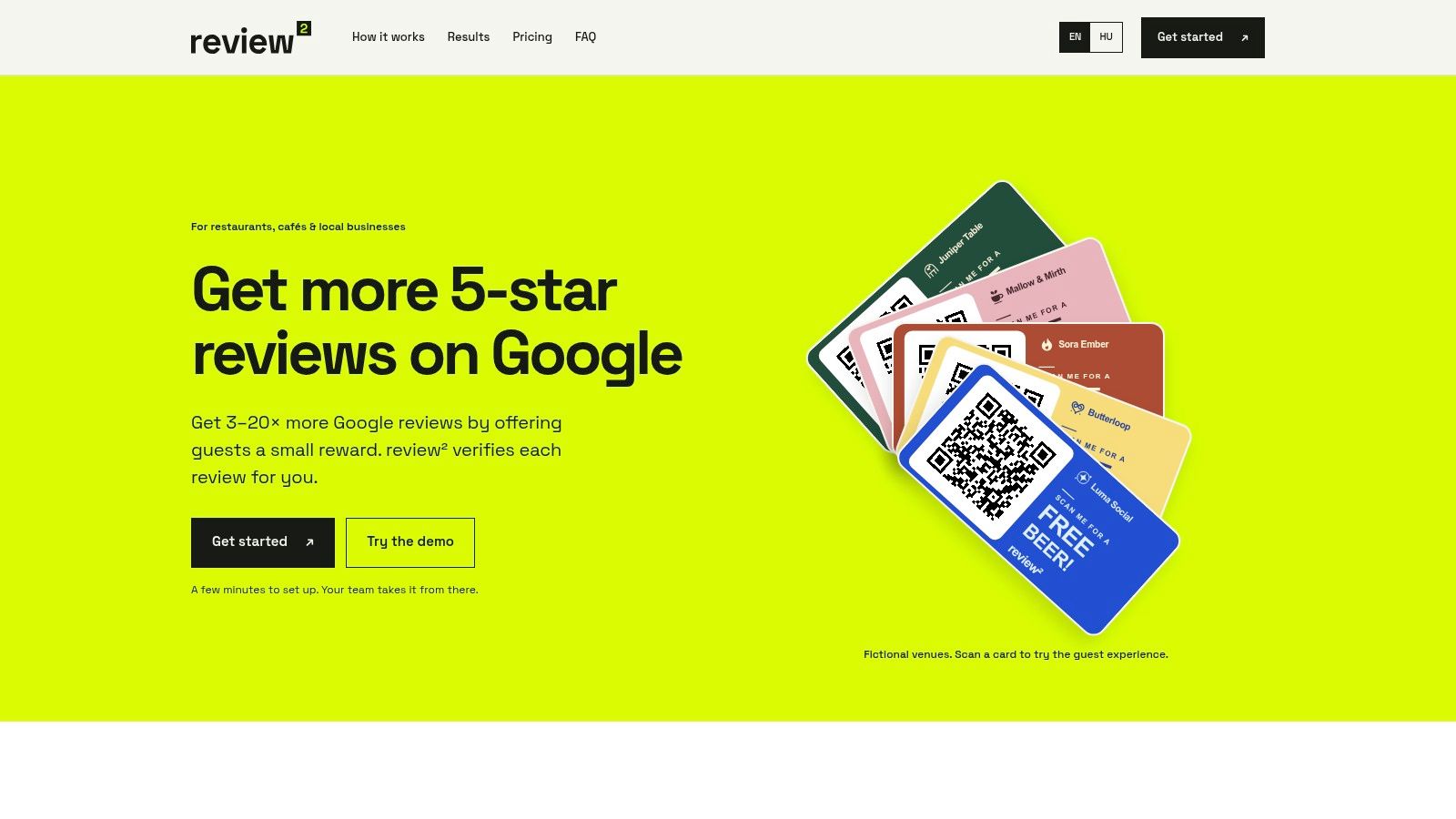
review² is a review-collection and reward service rather than a public directory guests browse. It fits restaurants, cafés and bakeries that want a QR-led route into Google reviews, since their guests already scan codes at tables and counters.
A guest scans the sticker, leaves a Google review and claims a small gift. The service checks that the review has arrived before the single-use coupon becomes redeemable; a click through to Google is not enough. The reward goes out regardless of star rating, and guests can say what they like.
What the operating workflow includes
Setup has three steps: choose the business on Google Maps, pick a reward, then order stickers and put one on each table. Staff redeem the live animated coupon on the guest's phone rather than a static screenshot. Every Monday, an email summarizes new reviews, ratings and progress, so nobody has to keep checking Google. Consent-based contact capture builds a guest database alongside it.
- Included tools: Review verification, sticker designs, single-use coupons, guest contacts and weekly reports.
- Subscription: One subscription covers all of a team's locations, with at least one location always billed. Plans run $29 monthly, $114 every six months or $174 annually, excluding VAT, with the same features throughout.
- Trial and extras: A 14-day trial costs $1. Rewards and stickers are extra; sticker prices include printing and worldwide delivery plus 10% spares, and there is no setup fee.
The service reports more than 30,000 collected reviews averaging 4.8 stars. In 30-day comparisons, a Budapest bakery went from 3 reviews to 37 (12.3×, rating up from 4.37 to 4.67), a pancake house from 88 to 495, and a restaurant from 8 to 42 while its average barely moved, 4.37 to 4.38. Treat these as reported outcomes, not forecasts.
The main drawback is platform risk. Google decides whether a review complies with its policies and stays published, and it may remove reviews written in exchange for a gift or restrict a listing. Verification confirms a review arrived; it does not grant permission or guarantee publication.
The review-management blog covers the operational details, but owners should settle the incentive-policy question before ordering stickers.
2. Google Business Profile
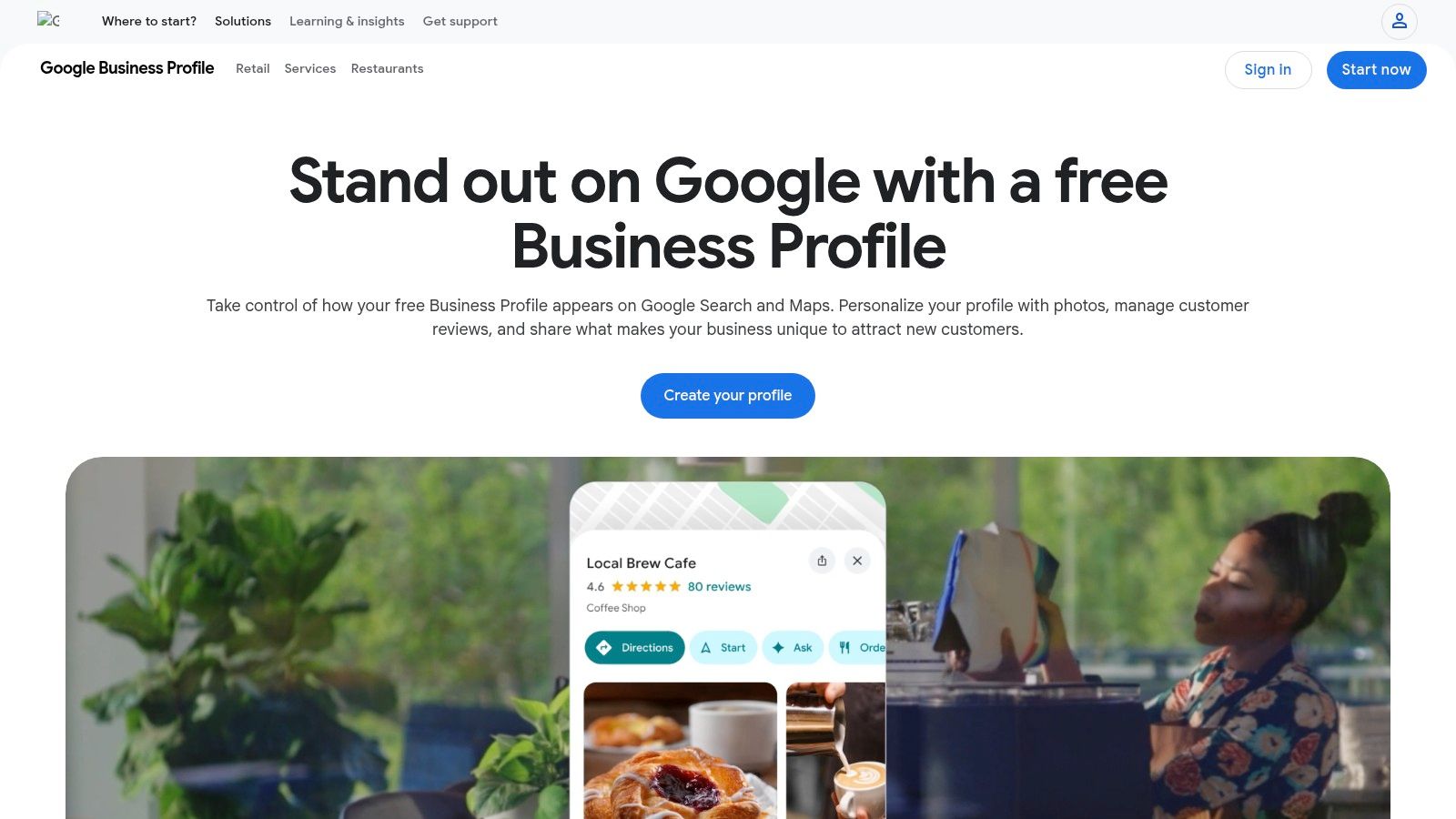
Best for nearby guests deciding where to go now. Google Business Profile combines reviews with Maps directions, opening hours, photos and other practical information.
A café can have excellent feedback and still lose a visit through incorrect holiday hours. Keeping those details accurate belongs in the same routine as responding to reviews, rather than treating the profile as a ratings page alone.
A useful free starting point
The profile is free to create and manage. After verification, owners can respond to reviews and use a review-request link or QR code to make the submission route easier to find.
- Works well: Nearby discovery, practical venue information and public owner responses in one place.
- Needs attention: Customers need a Google Account to post, and reviews may take time to appear or be removed.
- Incentive rule: Google's review guidance prohibits benefits in exchange for reviews, selectively soliciting positive feedback and pressuring guests to review on the premises.
A plain review link removes friction without introducing a reward. Staff should invite honest feedback without watching over a guest's shoulder or asking for a particular rating.
For businesses fixing their online foundations, this local business listing guide provides a useful next step. Accurate information and a manageable response routine matter more than decorative profile updates.
3. Yelp
For a restaurant whose guests compare food photos and detailed accounts before booking, Yelp can earn a place alongside Google. Its usefulness depends on the local audience, so owners should inspect relevant nearby restaurant pages before committing much time.
Yelp lets businesses claim a page for free, maintain basic details and respond to public reviews. Advertising and other paid offerings are separate from that basic presence.
- Strongest feature: Customer descriptions and photos can explain portion sizes, atmosphere and service in ways a star rating cannot.
- Main trade-off: Submitted reviews aren't necessarily recommended or prominently displayed.
- Cost discipline: A claimed page doesn't require an advertising purchase; paid promotion needs its own budget and evaluation.
Maintain the page without chasing submissions
Yelp isn't a channel for a reward-for-review campaign. Owners should check its current solicitation rules before asking customers to post, rather than copying a Google request script into every platform.
Research discussed in Yelp's consumer trust survey emphasizes consumers' preference for detailed, firsthand experiences. For operators, useful feedback describes what happened during the visit, not merely whether the guest approved.
Yelp activity also shouldn't be sold internally as a shortcut to Google visibility. A guide to better ranking on Google addresses a separate objective; a Yelp page should justify its upkeep through the guests who consult it.
4. Tripadvisor
A restaurant near hotels, visitor attractions or a busy sightseeing route has a different discovery problem from a residential coffee shop. Travelers need reassurance before arriving, often without local knowledge or a friend's recommendation.
Tripadvisor's owner tools allow businesses to claim a listing for free, update details, upload photos and respond to reviews. Paid marketing products and sponsored placements sit outside those basic tools.
Prioritize visitor questions
For a tourist-facing restaurant, useful listing details include meal service times, location instructions and clear photographs of the dining room. Review responses should address practical concerns without turning every reply into a sales pitch.
A traveler comparing unfamiliar restaurants needs an accurate picture of the visit, not a page full of promotional language.
Tripadvisor prohibits review incentives, including free drinks and discounts. A restaurant shouldn't attach a complimentary dessert to a Tripadvisor submission, even when the reward is available for any rating.
The upside is a review environment built around destination research and visitor experiences. The drawback is relevance: a bakery serving mostly repeat neighborhood customers may get more value from maintaining its local-search profile first.
Start with the free listing and inspect whether guests mention finding the venue through Tripadvisor. Paid exposure deserves consideration only when the business can explain what it expects to gain and how it will judge the expense.
5. Facebook Recommendations
Facebook works best when the business already has an active local audience there. A bakery posting its daily selection or a café answering community questions can keep recommendations close to those existing conversations.
Facebook business Pages combine business details, photos, updates, messages and Recommendations. Page features and availability can vary, so owners should inspect the actual Page settings rather than assume every account has identical tools.
- Good fit: Businesses whose customers already follow, message and discuss them on Facebook.
- Practical benefit: Feedback sits beside current updates, making it easier to connect a recommendation with the venue's everyday activity.
- Limitation: It's less specialized than a restaurant or travel review platform, and some guests won't use it for local research.
Keep the workload contained
A basic Page presence doesn't require buying advertising. Paid reach is a separate decision, and posting more often isn't automatically a reason to increase the budget.
The operating cost is attention. Someone needs to check messages, correct outdated information and respond calmly when a recommendation becomes a public conversation.
A sensible approach is to maintain Facebook as a secondary review channel, not create a new content schedule solely to collect feedback. Owners considering any incentive should confirm Meta's current rules first; the availability of Recommendations isn't permission to run a reward campaign.
For a business already stretched at the counter, an accurate Page with monitored messages beats an ambitious publishing schedule that staff can't sustain.
6. OpenTable
A reservation-led restaurant can handle reviews within the same operating environment as bookings. OpenTable is most relevant when the restaurant already uses it to seat diners, not when a walk-in bakery wants another review profile.
OpenTable's restaurant platform connects diner reviews with reservations and offers tools for monitoring and responding to feedback. Reservation, guest and table-management functions provide the broader reason to consider the product.
Evaluate the booking system first
Restaurant products involve fees, with pricing depending on the selected package and needs. Some plans also offer review aggregation from other sources, so owners should distinguish included feedback tools from optional capabilities.
- Useful context: Reservation-linked feedback can help managers understand which visit a diner is describing.
- Operational benefit: Booking and feedback tasks can sit together instead of requiring unrelated systems.
- Weak fit: Counter-service venues without OpenTable diners have little reason to prioritize it.
The review feature shouldn't carry the whole purchasing decision. A restaurant needs to judge the reservation workflow, staff usability and total fees before treating feedback management as an added benefit.
Reservation linkage also doesn't make review incentives acceptable. Owners should follow OpenTable's current review rules and avoid attaching rewards or favorable treatment to a diner's submission.
For a restaurant already handling bookings through the platform, reviewing feedback during the manager's booking check is a practical routine. For a takeaway coffee bar, another channel will usually deserve attention first.
7. Trustpilot
A bakery selling shipped gift boxes faces a different trust question from one selling pastries across a counter. Online customers may care about delivery, packaging and problem resolution more than seating or queue length.
Trustpilot is better matched to that broader customer journey. Trustpilot's business platform offers public company profiles, review replies, management tools and website widgets for displaying feedback.
- Free entry point: A free plan provides limited review invitations.
- Paid-plan consideration: Paid plans add tools and higher limits, with a 12-month commitment and pricing per domain.
- Best-fit business: Online sellers and companies serving customers across locations or markets.
Separate company feedback from venue feedback
For a neighborhood café, maintaining Trustpilot may add work without answering the questions nearby guests ask. For an online bakery, reviews about ordering and fulfillment can be directly relevant to a purchase.
The distinction matters when interpreting feedback. A complaint about a damaged delivery calls for a different response from a complaint about table service, even when both belong to the same business.
Owners should check invitation limits, widget availability and contract terms before choosing a paid plan. They should also follow current invitation and incentive rules rather than assuming a reward workflow used elsewhere can transfer.
The practical test is customer relevance. If guests mainly search for directions and opening hours, a local listing comes first. If customers evaluate the business before placing remote orders, a company-review profile becomes more useful.
8. Better Business Bureau (BBB)

BBB adds business-practice and complaint context, rather than another customer star score. That distinction matters when comparing review sites for businesses.
Better Business Bureau profiles can show customer reviews, complaint information and a separate BBB rating. The rating considers factors such as complaint handling, transparency and government or licensing actions; it isn't an average of customer review sentiment.
A profile and accreditation are different
A business can have a profile without paying for accreditation. Accreditation is a separate annual paid program for eligible businesses, with dues that vary by business.
Budget distinction: Paying for accreditation isn't the same purchase as opening a review profile, and neither should be confused with buying favorable customer feedback.
For a café or restaurant, BBB is often less central to guest discovery than local search or food-focused platforms. Its stronger use is giving customers a place to inspect complaint handling and business conduct when those issues influence their choice.
Owners should monitor relevant complaints and keep business information accurate. Applying for accreditation should be a deliberate trust-mark decision, not a reaction to the existence of a profile.
Review requests still need to follow current BBB rules. A paid relationship with the organization doesn't give a business control over customer sentiment or justify rewards for favorable feedback.
For hospitality operators with limited administrative time, BBB usually belongs behind the platforms guests consult before choosing a meal.
9. Nextdoor
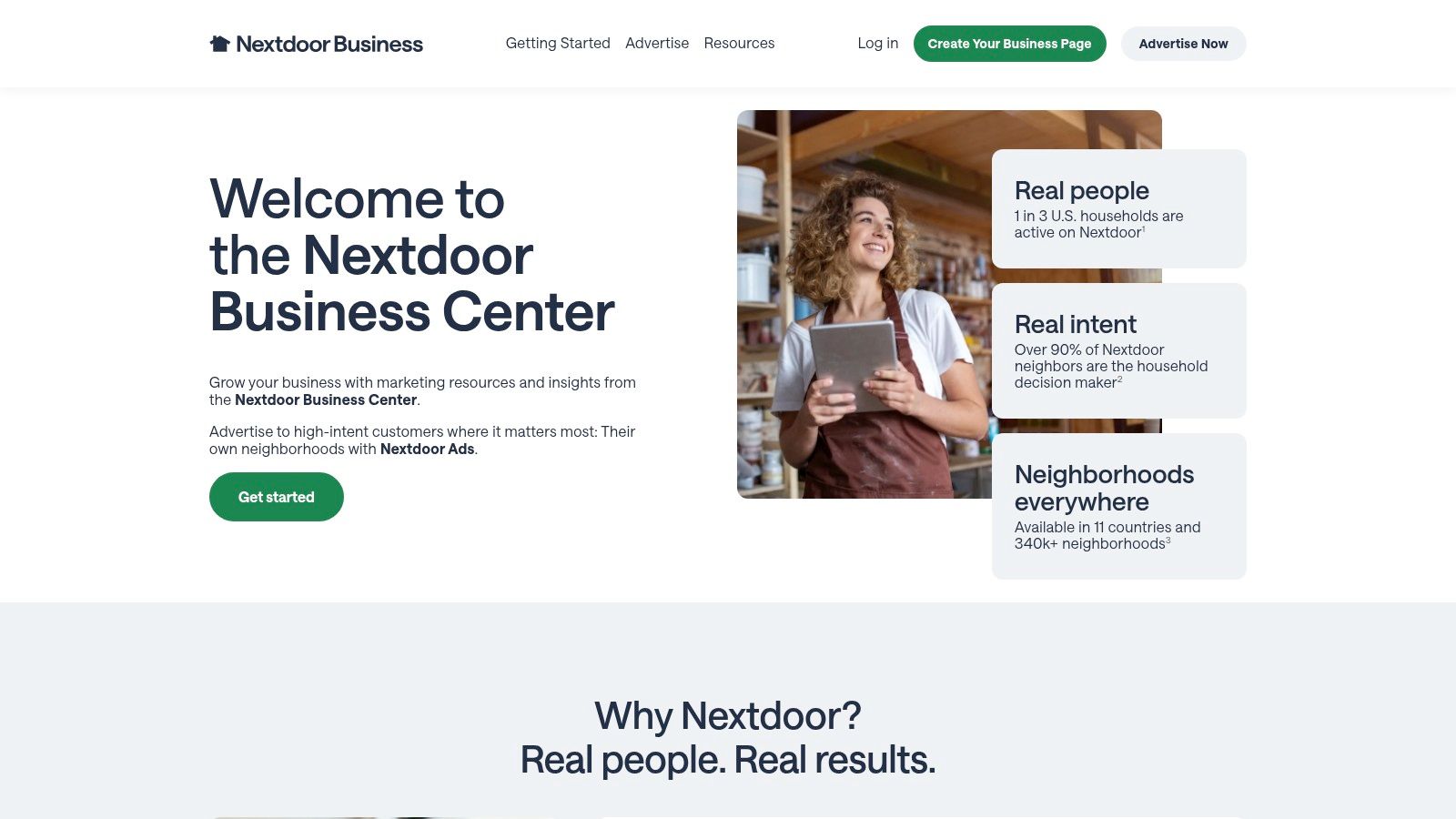
A neighborhood bakery may benefit more from nearby residents recommending its bread than from building a profile aimed at travelers. Nextdoor is designed around that local word-of-mouth setting.
Nextdoor's business platform offers free Business Pages with contact information, recommendations and Faves. Optional paid local advertising is separate from the page itself.
- Where it fits: Community-facing businesses serving nearby households.
- What it adds: Recommendations can appear within neighborhood discussions and feeds.
- What it doesn't replace: A neighborhood endorsement isn't equivalent to a broadly visible Google or Tripadvisor review.
Be useful before being promotional
The platform's value depends on whether residents in the actual trading area use it. A claimed page can be worthwhile, but a paid campaign needs evidence of relevant local attention rather than enthusiasm about neighborhood targeting alone.
Businesses should follow posting and promotion rules, identify themselves clearly and avoid inserting sales messages into unrelated conversations. Review-incentive permissions should be checked directly before offering anything for a recommendation.
A café might keep its opening details current and respond when residents ask about accessible seating or takeaway options. That's a better operating fit than repeatedly posting requests for praise.
The main cost of the free presence is staff attention. If nobody can monitor local questions, a basic accurate page is preferable to promising an ongoing community conversation the business can't maintain.
10. Angi
Angi belongs on a local-business shortlist for home-service professionals, not hospitality venues. A restaurant owner comparing review platforms can usually rule it out quickly.
Angi combines profiles and consumer reviews with service discovery and paid lead-generation products. Contractors and other eligible professionals can manage their presence and, depending on the program, receive prospective customer inquiries.
Judge lead costs separately from reviews
Profile and lead-program costs vary, so providers should confirm the specific agreement before committing. Some profiles can import a limited number of Google reviews, but that capability shouldn't be assumed across every account or program.
- Relevant use: Helping homeowners evaluate professionals for a project.
- Potential benefit: Reviews and service inquiries within the same platform.
- Main financial risk: Paid leads need budget controls and a realistic assessment of whether inquiries become suitable work.
A lead isn't a completed job. Providers need to understand how charges apply, what kinds of inquiries they receive and who will respond before paying for a program.
Review collection also needs its own policy check. Paying for access to prospective customers doesn't authorize paying those customers for favorable reviews.
For restaurants, cafés and bakeries, Angi adds little to the guest's decision. Even a venue offering catering shouldn't assume that makes a home-services platform relevant; the customer's buying behavior and the platform's eligible categories must match.
Each platforms best fit, cost model and main caveat
Read the caveat column first. It is usually what disqualifies a platform for a given venue, long before price does, and it reflects where each site's audience looks rather than how popular the platform is overall.
| Item | Best for | Cost model | Main caveat |
|---|---|---|---|
| review² | Restaurants, cafés and local venues collecting Google reviews through a QR sticker, verified review and small guest reward | Listed plans: $29 monthly, $114 every six months or $174 annually; a 14-day trial costs $1, and rewards plus sticker orders are extra | Incentivized reviews may be removed by Google or put a listing at risk |
| Google Business Profile | Local discovery through Google Search and Maps | Free | Google prohibits review incentives; reviewers need a Google Account |
| Yelp | Restaurants and local consumer businesses | Free basic page; optional paid advertising | Some reviews may not be recommended or prominently displayed |
| Tripadvisor | Businesses serving tourists and travelers | Free listing; optional paid marketing | Prohibits review incentives, including discounts and free drinks |
| Facebook Recommendations | Businesses with an active local Facebook community | Page features are generally available without a stated fee | Features can change, and local customers may not use Facebook for recommendations |
| OpenTable | Restaurants using OpenTable reservations | Reservation products involve fees; pricing depends on needs | Less useful without OpenTable diners |
| Trustpilot | Online and multi-market businesses | Free limited plan; paid plans per domain with a 12-month commitment | Free review invitations are capped |
| Better Business Bureau (BBB) | Businesses where complaint history and business-practice context matter | Profile available without charge; accreditation requires annual dues | BBB rating is distinct from customer review sentiment |
| Nextdoor | Independent businesses targeting nearby residents | Free Business Page; optional paid advertising | Value depends on local customer use of Nextdoor |
| Angi | Home-service professionals and contractors | Costs vary; paid lead programs available | Poor fit for restaurants, cafés, and bakeries |
Pick One Platform to Test First
Choose a primary platform where guests already look, then make it manageable. A neighborhood café will often start with its local-search presence, while a tourist-facing restaurant may give Tripadvisor more attention. A reservation-led dining room should assess the tools already attached to its booking system before adding another dashboard.
Confirm current pricing, billing commitments and review policies directly before spending. Free profiles still take time to maintain, while paid subscriptions, advertising, accreditation, physical materials and guest rewards are different expenses. A useful comparison keeps those costs separate rather than reducing everything to a subscription price.
Measure the work that actually matters
Track results for a few months before adding another platform. Record completed, publicly visible reviews, their usefulness, unanswered feedback and the staff effort needed to keep the process running.
- Collection: Count published reviews rather than scans, clicks or opened forms.
- Quality: Look for firsthand details that answer real purchase questions.
- Response: Assign someone to reply and turn recurring complaints into operational actions.
- Cost: Include subscriptions, promotion, materials, rewards and staff time.
A rising count doesn't excuse selective requests or neglected criticism. Guests should remain free to describe a disappointing visit, and staff shouldn't steer unhappy customers away from public feedback while directing only satisfied guests toward it.
Keep law, platform rules and consent separate
The FTC's consumer reviews and testimonials rule prohibits compensation conditioned on positive or negative sentiment. A sentiment-neutral incentive isn't automatically prohibited under that framework, but disclosure obligations and stricter platform restrictions still matter.
Marketing permission is another separate decision. The UK Information Commissioner's Office guidance requires valid consent to be freely given, specific, informed and affirmative; an email address collected to deliver a coupon isn't automatically permission for promotional messages.
No review site or collection tool can guarantee ratings, rankings, placement or AI recommendations. Verification also can't guarantee that a platform will retain a review.
For owners evaluating a QR sticker and reward-coupon flow, the demo offers a low-pressure way to inspect the guest journey before deciding whether it fits. The sample experience doesn't publish a review, verify feedback, issue a redeemable reward or subscribe a guest to marketing.
For businesses comparing review sites, review² offers QR stickers, review verification, single-use reward coupons and weekly reporting, with optional consent-based guest contacts. Visit review² to try the demo and assess the guest and staff workflow, while weighing Google's incentive restrictions before starting a campaign.